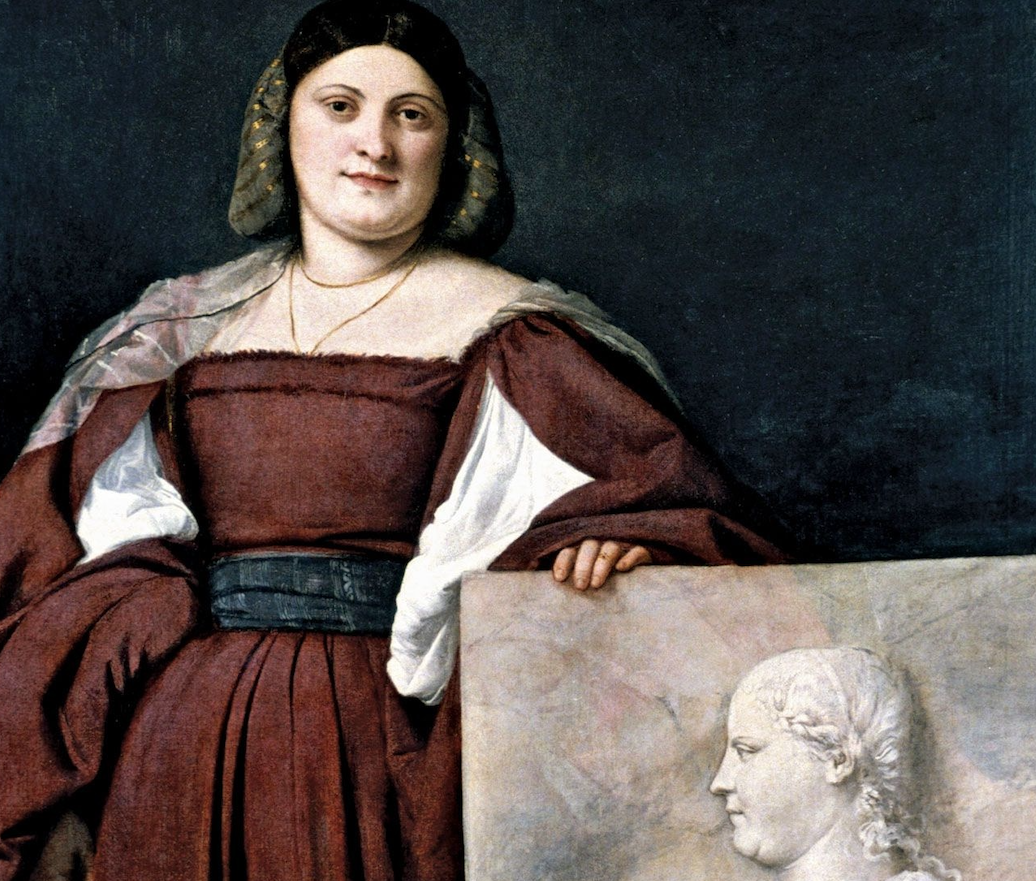
During the Italian Renaissance the paragone debate over which artistic form was superior—poetry, painting, or sculpture—filled thousands and thousands of pages. In Italian the word paragone means “comparison” but it also—as in the English “paragon”—is used in the expression pietra di paragone (touchstone), a standard used to identify a thing of excellence. The process of comparing one thing to another implies evaluation and judgment, and some translate the paragone debate as the “rivalry among the arts.” The impetus to compete and the desire to prevail is considered by many to be one of the driving forces behind the Italian Renaissance and may be found in a variety of contexts such as the figurative arts vs. literature, the use of Latin vs. the vernacular, the topos of the ancients vs. the moderns, the presentation of the self and the expansion of life-writing, the codification of professional roles such as the courtier, the artist, the prince, and the debate on the gender roles of men and women in fifteenth- and sixteenth-century Italian society. We will discuss these and other topics in the works of Francesco Petrarca, Leonardo da Vinci, Baldassarre Castiglione, Tullia d’Aragona, Matteo Bandello, Benvenuto Cellini, Michelangelo Buonarroti, Vittoria Colonna, and Giovanni Della Casa.
- Docente: Julia L. Hairston